Meet the Farmers
We know every field our grain comes from. We pay what's asked, no negotiation. We visit. We talk. We eat together. This is what a food system built on respect looks like.
Simon and Anita
FARM 1: FERAL FARMING / CHAPEL HOUSE FARM
Herefordshire
FERAL FARMINGChapel House Farm, Black Mountains, HerefordshireSimon — Heritage wheat, ancient breed livestock, rewilded land
Simon isn't farming Chapel House Farm. He's restoring it.
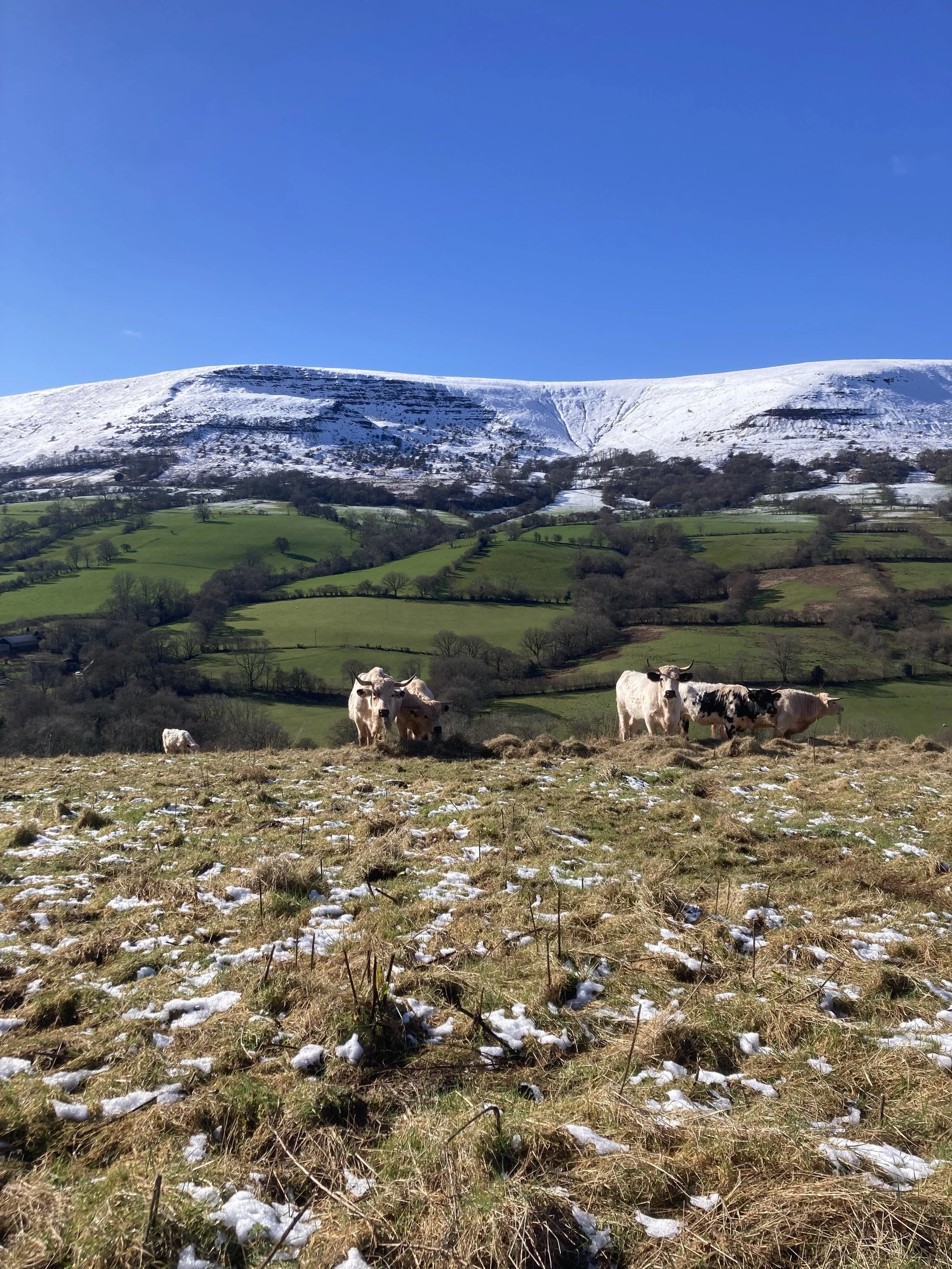
Nestled in the Black Mountains of Herefordshire, Chapel House is home to the Feral Farming project — a deliberate return to the way land worked before industrial agriculture convinced us efficiency mattered more than ecology. Ancient breeds graze wild. Long-buried seeds are disturbing back into life. Dragonflies are returning to fields that hadn't seen them in decades.
The grain grows in this. That's not incidental — it's the point.
The animals
Chapel House's White Park cattle are one of Britain's most ancient breeds — the last wild cattle of our forests. They graze on natural forage, browse tree leaves and wild herbs, never fed concentrate cereal. One cow can support half its own body weight in insect life through its dung alone.
The Iron Age pigs — Wild Boar crossed with rare breed Large Black — are habitat architects. They root out bracken, disturb soil to release long-buried seeds, create natural scrapes that hold rainwater. Fed on wild greenery, fallen crab apples, hazelnuts, acorns, and organic bran from the farm's own milling. No soya. No concentrate.
These animals aren't livestock in the industrial sense. They're the people who build the place.
The grain
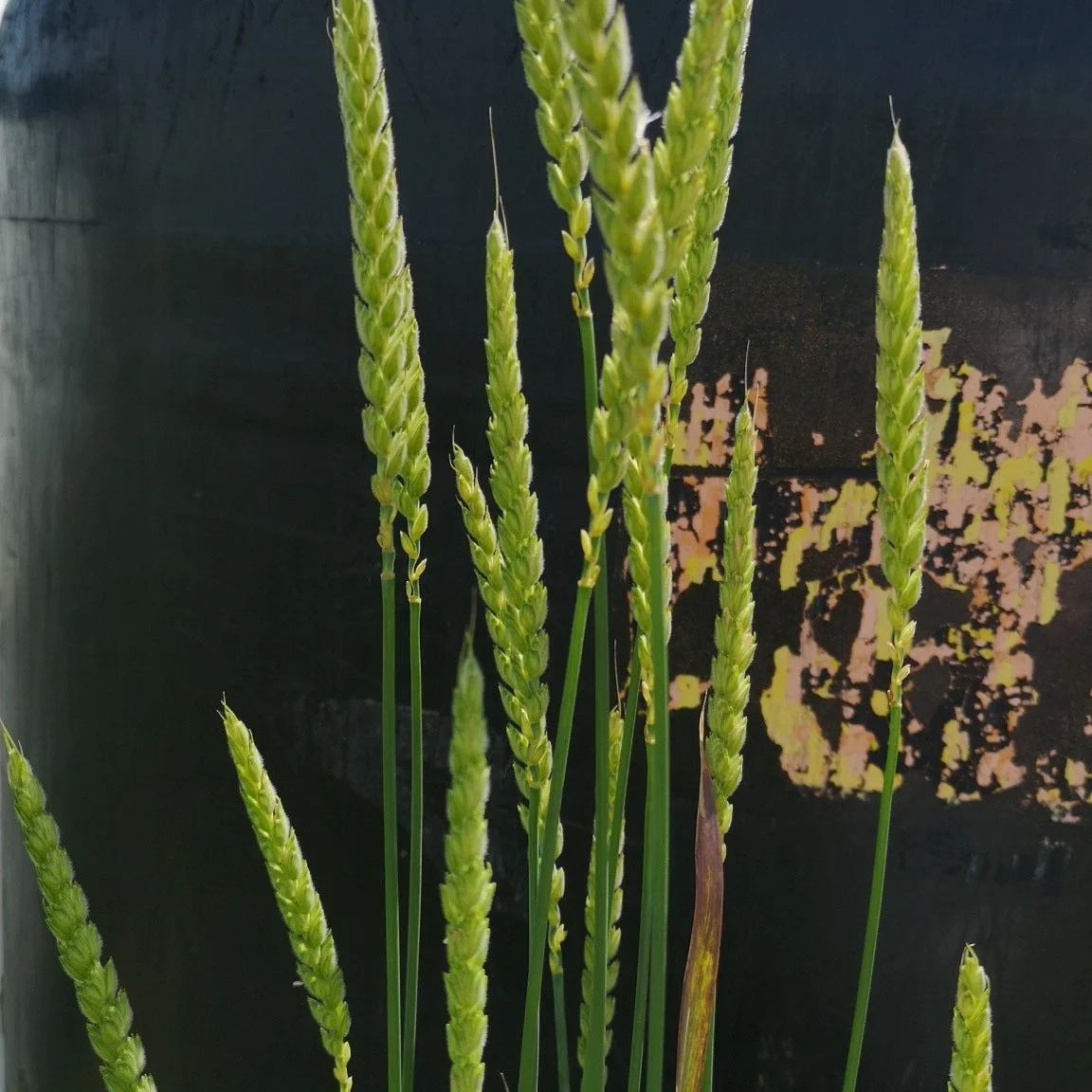
Red Lammas. April Bearded. Hen Gymro. Ergyng. Ancient varieties planted alongside pulses and herbs in a living ecosystem — no chemical intervention, no monoculture, nothing to accelerate what doesn't want to be accelerated.
The grain is older than modern wheat's gluten structure. Some of our customers find it more digestible. All of them find it tastes like something.
The partnership
We pay what Simon asks. No negotiation. No commodity pricing. The price reflects the restoration of the soil, the return of the insects, the long-term health of that land.
Simon and Andrew speak regularly. We're not customers — we're invested in what happens to that place.
This grain goes into our pasta, our noodles, our crackers, and our biscuits. When you eat Fresh Flour, you're eating the Black Mountains.
Fred
FARM 3: GOTHELNEY FARM
Foot of the Quantock Hills, Somerset
GOTHELNEY FARM Bridgwater, Somerset — foot of the Quantock HillsFred Price — Agroecology, heritage wheat trials, forage-fed pigs
Fred Price has been running one of the most ambitious wheat diversity trials in the UK for over a decade. It started with a bulk order from a US gene bank — 8,000 varieties, 5 grams of each — and a question: which of these actually belong here?
That question is still being answered. The trials are still running. And the grain coming out of them is feeding some of the best restaurants, bakeries, and mills in the country. Including ours
The farm
Gothelney is a small family farm at the foot of the Quantock hills — Fred, his family, and an apprentice called Rubens who's been learning the land for two years. Old-fashioned mixed farming: heavy livestock integration, high fertility, no synthetic inputs. 8% of the farm dedicated to habitat for beneficial insects. Soil organic matter up by as much as 4% in five years.
The pigs graze multispecies herbal leys and cover crops over winter. They justify, Fred says, many of the most positive aspects of the rotation. They're not just animals — they're tools for building the soil that grows the grain that ends up in your bowl.
The grain
Heritage wheats. Population cereals. Intercropped with peas, oats, and barley. Varieties that express flavour, nutrition, and resilience rather than maximum yield. Fred's question — why do we breed our own livestock but outsource grain breeding to corporations? — shapes everything grown here.
Gothelney is part of the Southwest Grain Network, a collective of farmers, millers, and bakers building an alternative to the commodity grain system. Fresh Flour is part of that network. This is what it looks like from the inside.
The partnership
Fred grows grain that deserves to be milled properly. We mill it properly. That's the whole agreement.
Quantock hills to Buckfastleigh, stone-milled the same week the grain arrives. You can taste the freshness. That's not marketing — it's chemistry.
George
Will
FARM 2: NEW HOUSE FARM
Bransford, Worcestershire
NEW HOUSE FARM Bransford, between Worcester and Bromyard, Worcestershire Will Tooby — Organic heritage and population wheats, The Fold Granary
The granary at New House Farm was milling grain in the 1970s. Then it stopped. Then Will Tooby brought it back.
That building is now The Fold — a café, a craft centre, a community space — and behind it, on certified organic land that never forgot how to grow things properly, Will is cultivating heritage and population wheats that are finding their way into some of the most interesting food being made in Britain right now. Including ours.
The grain
Heritage wheats. Population wheats. Varieties chosen for flavour and fitness to the land, not for yield and compliance with an industrial system that doesn't care what things taste like.
Will describes bringing grain back to New House Farm as bringing it full circle. "The land was once growing grain and milling flour in the 1970s. To be able to start again — and do it organically and in a way that reflects today's values — is incredibly rewarding."
We agree. We can taste it.
The partnership
New House Farm sits at the edge of the Malverns — a landscape with its own particular character, its own particular light and soil. That terroir ends up in our flour. Our flour ends up in your pasta. The chain is short, the traceability is absolute, and Will knows exactly where his grain goes.
Worcestershire to Devon, field to mill to table. No shortcuts in between.
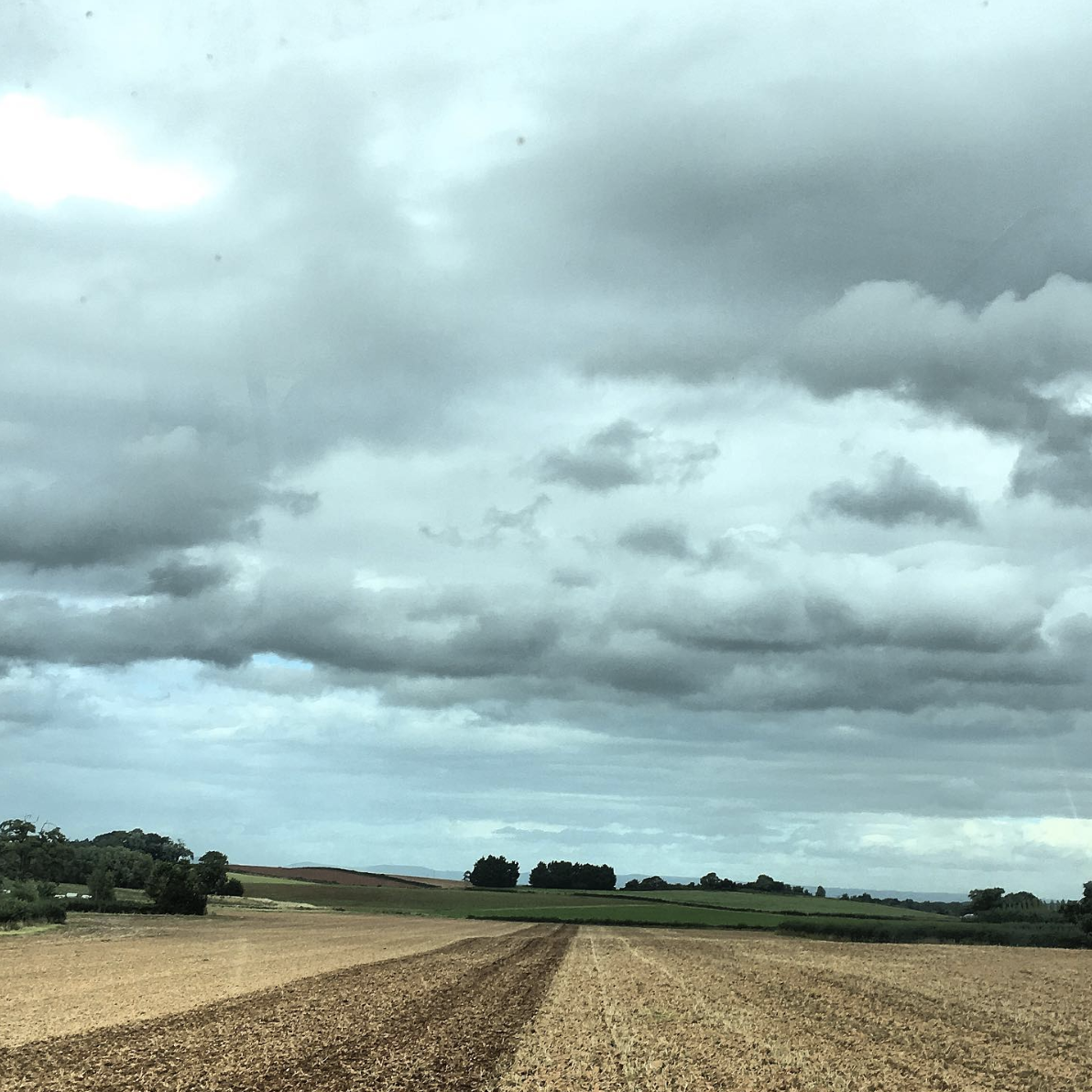
FORTESQUE FARM Exeter, Devon George Greed — Heritage grain, minimal tillage, soil as the starting point
The Greed family treat the soil with reverence. Ploughing is a last resort.
That single sentence tells you everything about how George approaches farming — and why his grain tastes the way it does. When you don't disturb the soil unnecessarily, when you let the mycorrhizal networks do their work, when you treat the ground as a living system rather than a growing medium, the grain that comes out of it carries that care.
George grows heritage wheat varieties on land that's managed with patience rather than force. No unnecessary intervention. No shortcuts that the soil will pay for later.
Why this matters to us
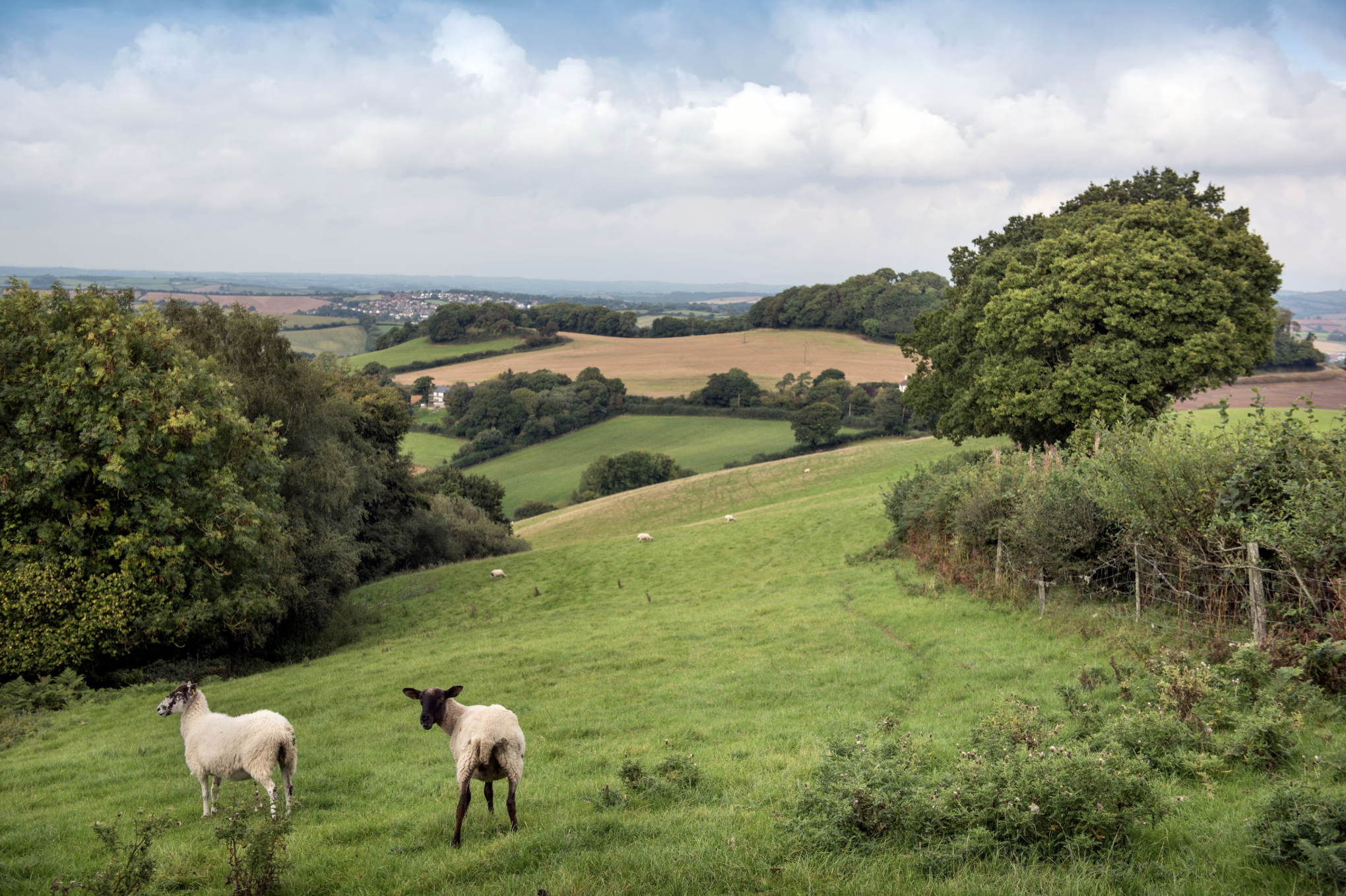
Fortesque Farm is Devon. We're Devon. When we can source grain from a farm we can drive to, from soil we've stood on, from a family whose approach to the land mirrors our own — that's the food system we're trying to build.
Short chains. Traceable grain. Farmers paid properly for doing things properly.
The grain
Heritage varieties, grown slowly, in soil that's treated as the foundation of everything rather than a problem to be managed. Clean, flavourful, with the kind of complexity that only comes from land that's been farmed with care over time.
Exeter to Buckfastleigh. Devon grain, Devon mill, Devon hands. As local as food gets.