
 Image 1 of 1
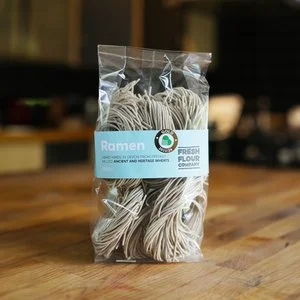
Our Ramen is handmade the old way — Japanese technique, stone-milled wheat, and time. It tastes like nuts, wheat, Japan: a clean, savory backbone that’s both humble and unforgettable. Versatile and robust, it stands up to everything from a delicate broth to a furious, spicy bowl.
I love it with crispy chili oil and a handful of seasonal greens — bitter rapini, thin-sliced bok choy, or quick-blanched pea shoots. Try it with a soft-boiled egg, scallions, and a hit of fermented soy for contrast.
Cooking
Bring a pot of water to a rolling boil.
Add noodles and cook ~5 minutes. Keep an eye on them — they’ll release a lot of starch.
After cooking: either rinse briefly to remove excess starch (for cleaner, springy noodles) or keep the starchy water to thicken and enrich your soup.
Notes
If you rinse, toss immediately with a splash of sesame oil to prevent sticking.
If you keep the starch, add it to sauces
Our Ramen is handmade the old way — Japanese technique, stone-milled wheat, and time. It tastes like nuts, wheat, Japan: a clean, savory backbone that’s both humble and unforgettable. Versatile and robust, it stands up to everything from a delicate broth to a furious, spicy bowl.
I love it with crispy chili oil and a handful of seasonal greens — bitter rapini, thin-sliced bok choy, or quick-blanched pea shoots. Try it with a soft-boiled egg, scallions, and a hit of fermented soy for contrast.
Cooking
Bring a pot of water to a rolling boil.
Add noodles and cook ~5 minutes. Keep an eye on them — they’ll release a lot of starch.
After cooking: either rinse briefly to remove excess starch (for cleaner, springy noodles) or keep the starchy water to thicken and enrich your soup.
Notes
If you rinse, toss immediately with a splash of sesame oil to prevent sticking.
If you keep the starch, add it to sauces